
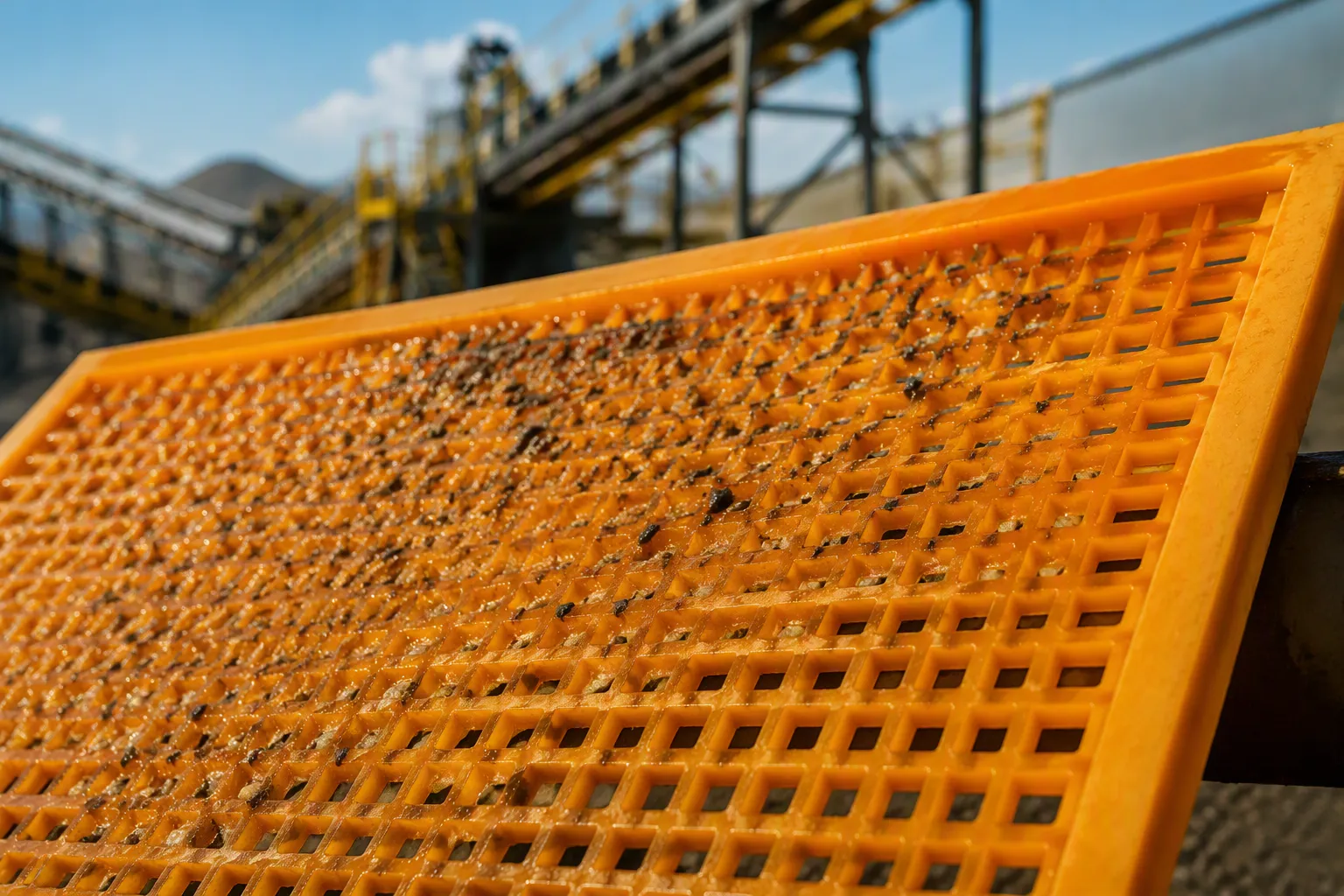
Selecting the right polyurethane fine screen mesh is a strategic decision. It balances application needs, geometry, material quality, and total cost. The polyurethane segment alone holds USD 0.65 billion in market value, growing at 5.5% annually. This growth reflects its durability and efficiency in abrasive mining and mineral processing environments.
This post offers a screening framework. First, understand your material and separation goals. Second, choose correct aperture and design. Third, evaluate polyurethane quality for durability. Fourth, perform cost-benefit analysis. Typical replacement intervals range from 3 to 12 months in abrasive operations, depending on media.
Avoid pitfalls and optimize screening performance. The right mesh improves efficiency and product quality. This guide helps navigate media options.
Key Takeaways
- First, define your material type and production goals to guide every mesh decision.
- Second, select the right aperture size and open area for accurate sorting and high throughput.
- Third, pick high-quality polyurethane with reinforced design to resist wear and last longer.
- Fourth, compare total cost including downtime, not just price, to make the best investment.
Assess Your Application Needs for Polyurethane Fine Screen Mesh
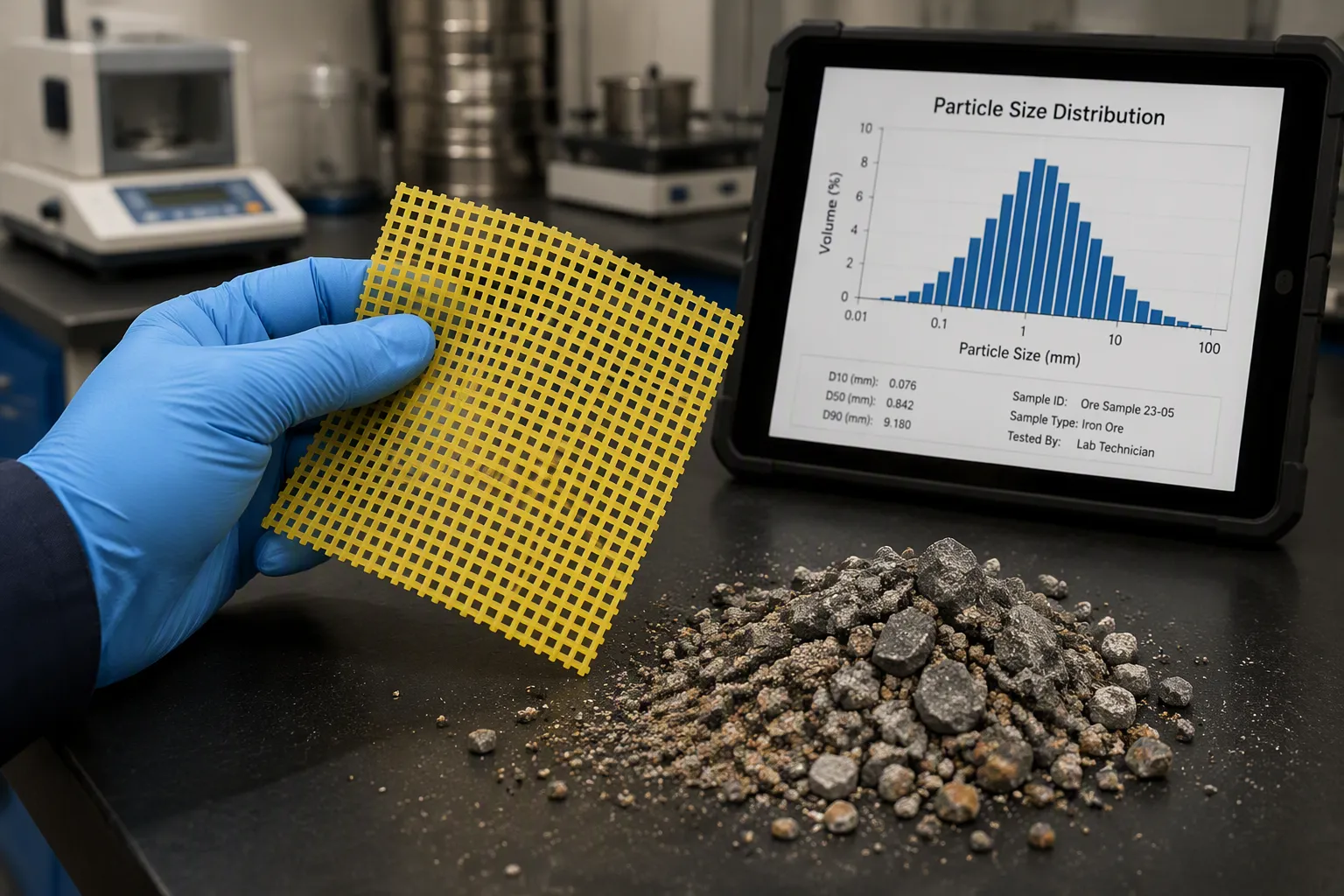
Every successful screening operation begins with a clear definition of the separation problem. The right media cannot compensate for an incomplete understanding of the feed material or the desired outcome. Before evaluating any product options, you must document your material characteristics and your production targets. This assessment phase determines every subsequent decision about aperture geometry, open area, and polyurethane formulation.
Material Type and Particle Size Distribution
The physical properties of your feed material dictate which mesh configuration will work. Hard, abrasive ores demand tougher media than soft, friable materials. The choice of mesh size and openness is critical but often overlooked. Selecting the wrong configuration can lead to inefficiencies in screening processes. This is a key material parameter to evaluate when selecting polyurethane fine screen mesh for mineral processing.
| Material Property | Relevance to Material Type Evaluation |
|---|---|
| High abrasion resistance | Indicates suitability for abrasive mineral slurries, a key criterion for material selection |
| Impact absorption | Shows ability to withstand heavy particle impacts without degradation |
| Flexibility under load | Demonstrates resilience and adaptability to varying screening conditions |
| Extended wear life in slurry environments | Confirms long-term performance and cost-effectiveness in mineral processing |
The particle size distribution of your feed directly determines the target cut point for fine particle separation. Fine screens must match this cut point, often operating in the sub-2 mm classification range. Screening efficiency reaches its peak when the particle size band being classified is narrow and close to the aperture size. The aperture selection must be tailored to the specific size distribution of the feed to maintain consistent cut accuracy and prevent capacity loss.
The selection of polyurethane screen aperture size must also account for factors beyond particle size. Target cut size, moisture content, and material shape all influence the final choice. Do not simply copy the aperture size from an existing wire mesh screen. Polyurethane panels have different material thickness and aperture profiles that change the effective open area and screening behavior. The particle size distribution influences not only the nominal aperture size but also the design of the aperture profile to ensure proper separation and throughput.
Material hardness and abrasiveness also guide durometer selection:
- Durometer selection based on abrasiveness: Panels are available in durometers from 55 to 90 Shore A; 60–80 Shore A is common for general mineral processing, while 80–90+ Shore A is used for highly abrasive applications where maximum wear resistance is the priority.
- Dual-durometer for combined conditions: A softer wear surface over a harder base is common for applications that combine abrasion with impact load.
- Aperture type to reduce pegging: Slotted mesh (rectangular openings) significantly reduces the risk of pegging on elongated particles, and tapered apertures in polyurethane panels also help particles pass through – this choice is influenced by feed characteristics such as particle shape and abrasiveness.
Define Screening Efficiency and Throughput Goals
Once you understand your material, you must quantify your production objectives. Two metrics matter most: screening efficiency and throughput measured in tons per hour. These goals directly influence your choice of aperture size and open area.
Polyurethane fine screen mesh maintains classifying materials accurately at over 92% efficiency throughout their extended lifespan, as confirmed by tests published in the Mining Technology Report for 2022.
Throughput means how much material you want to move. If you need to move a lot, use a bigger screen and bigger mesh holes (larger aperture). Bigger holes allow more material to pass, increasing throughput in tons per hour. However, bigger holes can make sorting less exact, so you must balance speed (throughput) and quality (product accuracy) when picking your mesh.
The mesh size of the screen is inversely proportional to the hole diameter and particle size, and directly proportional to the number of holes. That is: the larger the mesh number, the more pores, and the smaller the pore diameter, indicating the finer particle size of the material; the smaller the mesh number, the fewer the number of pores, and the larger the pore diameter, indicating the larger the material particle size. Therefore, a smaller mesh number (larger aperture) allows larger particles and more material to pass through, directly increasing the throughput in tons per hour.
The open area ratio is calculated as: Open Area Ratio (%) = (W² / (W + d)²) × 100, where W is the opening and d is the wire diameter. This captures a simple geometric truth: the open area is the square of the opening divided by the area of one full pitch. A 10 × 10 mm mesh with 3 mm wire therefore has an open area of 100 / 169 = 59%. Larger openings (W) increase the open area ratio, which directly allows more material to pass through per unit time, thereby increasing throughput measured in tons per hour.
Your screening machine’s vibration characteristics also affect achievable efficiency. Different media respond differently to stroke amplitude and frequency. A thorough assessment of your equipment’s capabilities ensures you select media that works with your system, not against it. This holistic view of mechanical screening prevents costly trial-and-error during commissioning.
Key Factors in Mesh Selection and Design
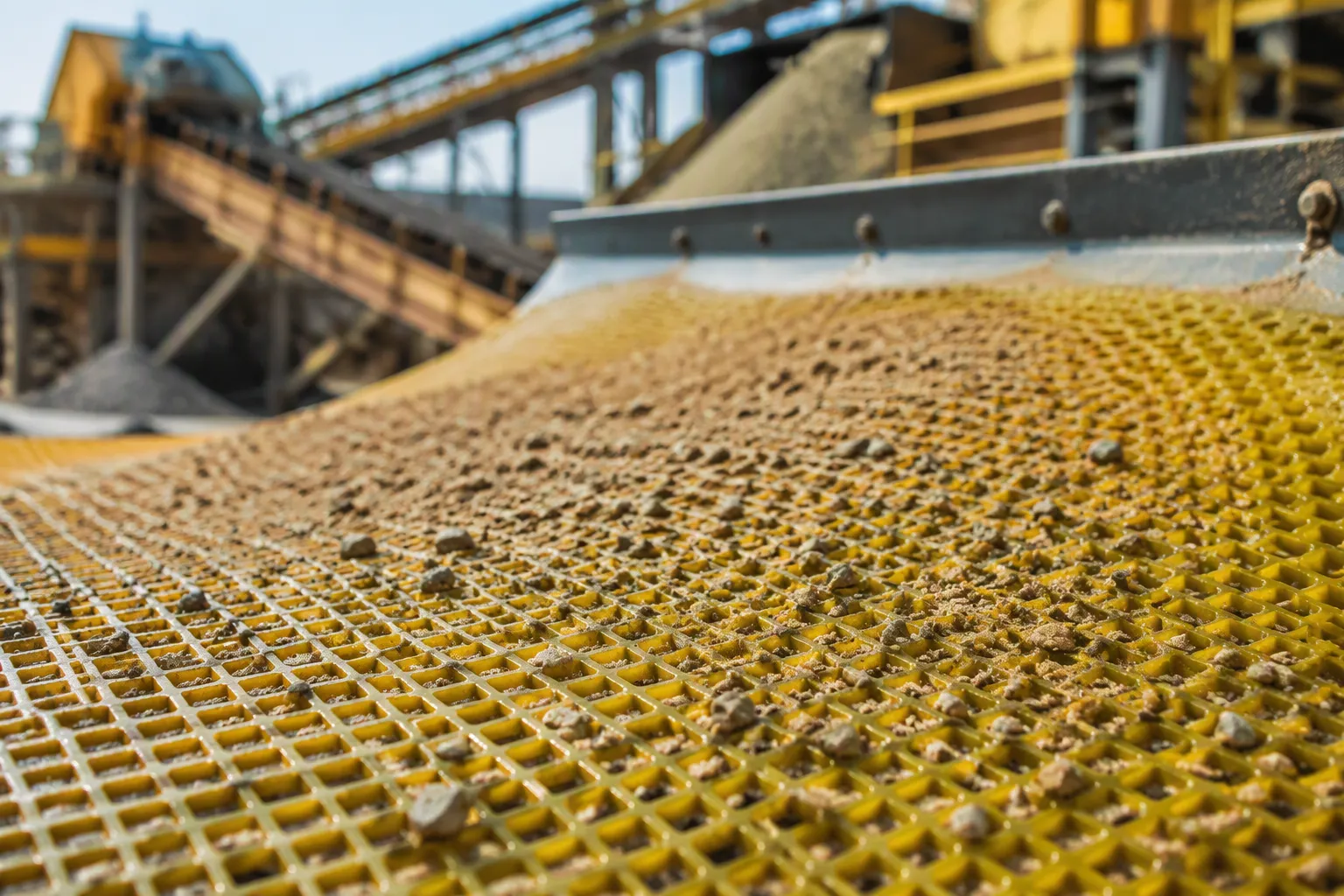
Selecting the right mesh requires understanding two technical parameters. Aperture size and open area determine cut point accuracy and throughput capacity. The interaction between them defines overall screening performance. These factors directly affect the success of any mechanical screening operation.
Aperture Size and Open Area
Aperture size controls the particle size that passes through the screen. The aperture must match the target cut point for fine screening. Different applications require different aperture ranges.
| Application | Aperture Range |
|---|---|
| Sand washing (construction/silica sand) | 75–150 µm |
| Coal fines dewatering (thermal/coking coal) | 150–500 µm |
Wet screening is preferred when the cut point is below 100 microns. Dry screening becomes unreliable at that fine size.
Open area percentage measures how much of the screen surface consists of openings. Higher open area allows more material to pass per vibration cycle. This directly increases throughput capacity. The opening rate for polyurethane fine screens ranges from 15.25% to 46.51% depending on slot size, with values such as 28.30% for 0.075 mm and 32.10% for 0.1 mm apertures. This range delivers strong capacity for fine screening.
The relationship between slot size and opening rate follows a clear pattern:
| Screen Slot (mm) | Opening Rate (%) |
|---|---|
| 0.045 | 15.25 |
| 0.075 | 28.30 |
| 0.1 | 32.10 |
| 0.2 | 39.64 |
| 0.3 | 39.60 |
| 0.7 | 46.20 |
| 1 | 43.35 |
| 2 | 57.53 |
| 3 | 46.51 |
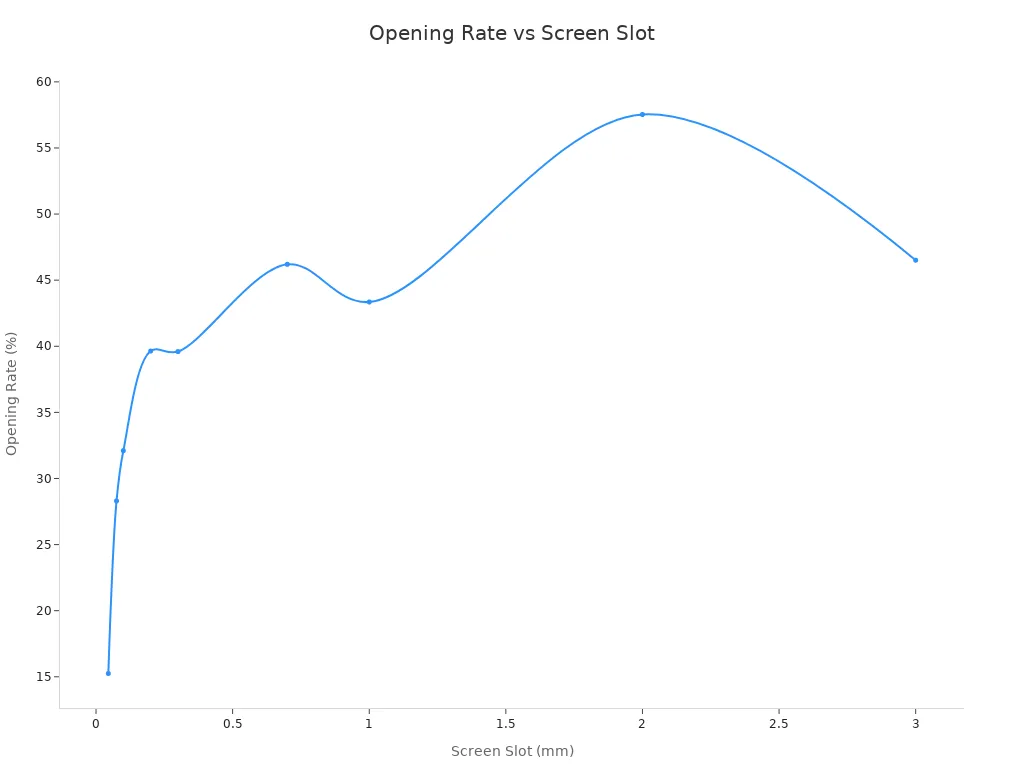
The data shows opening rate increases with slot size but plateaus near 0.2 mm. Beyond that point, gains become smaller.
For very fine apertures down to 0.2 mm, the anti-blinding properties of polyurethane fine screens are especially valuable. The opening rate ranges from 15.25% to 46.51% depending on slot size.
Higher open area provides multiple benefits. More space exists for material to pass per vibration cycle, which increases throughput. More openings give undersize particles more chances to pass through, which improves efficiency. Higher open area also reduces the relative wire surface for particles to lodge against, making the screen more resistant to blinding. The trade-off is that higher open area via thinner wire shortens screen life under abrasive conditions. This is where self-cleaning screen media properties become valuable. The taper-shaped slots in polyurethane panels prevent clogging without sacrificing open area.
Wire Diameter and Structural Integrity
Wire diameter determines the structural strength of the mesh. Thinner wire increases open area but reduces durability. Thicker wire provides longer service life but lowers throughput. In mining, the balance between open area and structural integrity is critical. Abrasive feed materials wear down thin wires quickly. This leads to premature failure and unplanned downtime.
In mining and mineral processing, the choice of media requires careful consideration. The screening machine must handle the load without mesh deformation. Advanced screen media like polyurethane panels offer superior structural integrity. They handle the demands of continuous operation in abrasive environments.
In mining and mineral processing, high-quality polyurethane absorbs impact better than wire. It resists abrasion and corrosion. The single-piece forming process with lining fiber reinforcement improves tensile strength. This prevents crazing and extends service life. In mining and mineral processing, the taper-shaped slot design also helps. Slots widen toward the bottom. This prevents particles from wedging and clogging. The mesh maintains consistent performance over time.
In mining and mineral processing, mechanical screening systems must withstand
vibration forces. The screen must stay taut on the frame. Slots must remain undeformed. Direct tensioning onto the frame keeps wires tight and slots stable. Modern screening technology continues to improve these designs. The combination of high open area and durable construction delivers reliable performance.
Self-cleaning screen media properties reduce maintenance needs. The taper shape and anti-blinding screening technology keep material flowing. This minimizes downtime and maximizes productivity. The right mesh selection balances all these factors for optimal results.
Evaluate Material Quality for Mining Durability
Polyurethane Properties and Wear Resistance
The quality of polyurethane determines how long a screen lasts in abrasive mining environments. Cheap media breaks down faster. Premium formulations resist wear much longer. Understanding key material properties helps buyers choose correctly.
Polyurethane screens offer measurable properties. Hardness ranges from 55 Shore A to 90 Shore A for typical screening applications. This range allows customization for different applications. Tensile strength falls between 3,000 and 8,000 psi. Higher tensile strength means the mesh resists tearing under heavy loads. Elongation at break ranges from 300% to 700%. This flexibility helps the screen absorb impact without cracking. Abrasion resistance is exceptional. Taber abraser tests show 50-150 mg loss for polyurethane versus 500+ mg for rubber. This difference explains why polyurethane lasts longer in harsh conditions.
These properties affect real-world performance. A screen with proper hardness and tensile strength handles abrasive feed without rapid wear. The polyurethane fine screen mesh must balance these properties for the specific application. Mining and mineral processing operations that choose high-quality media reduce replacement frequency. This directly improves efficiency by reducing downtime. The right material properties also improve product quality by maintaining consistent aperture size over time.
Design Features That Extend Service Life
Smart design features add years to screen life. Single-piece forming with lining fiber improves tensile strength and prevents crazing. Crazing is a common failure mode. Small cracks form on the screen surface. The reinforcement stops these cracks from spreading. This construction ensures the media maintains structural integrity throughout its service life.
Taper-shaped slots prevent particle wedging. The slots widen toward the bottom. Material flows through smoothly without clogging. This self-cleaning screen media maintains consistent performance without cleaning stops. The design keeps screening efficiency high. Mining and mineral processing operations avoid downtime from blocked openings.
Reinforced edges also matter. Metal hooked edges connect with steel wires. Polyurethane elastomers cover these edges. This structure prevents edge failure under heavy loads. The mesh stays taut on the frame. Slots remain undeformed. This design extends service life by 3 to 10 times compared to conventional metal screens.
Modular panel systems allow quick replacement of worn sections. Operators replace only the damaged panel. The entire deck does not need removal. This reduces downtime and maintenance costs. The combination of durable materials and smart design delivers reliable performance.
These features make polyurethane a sustainable materials choice. Fewer replacements mean less waste. Longer service life reduces environmental footprint. The taper-shaped slots and reinforced construction ensure consistent product quality over the screen’s lifetime. The right media selection optimizes overall screening performance in demanding mining environments.
Balance Cost and Performance in Mining and Mineral Processing
Perform a Total Cost of Ownership Analysis
The initial purchase price tells only part of the story. A complete economic evaluation must include downtime, replacement frequency, and the value of improved recovery. This approach is called total cost of ownership, or TCO. It reveals the true cost of any screening decision.
Consider a direct comparison. Wire mesh screens cost roughly $500 per unit and last about one month. A plant needs 12 replacements each year. The annual screen cost reaches $6,000. Downtime for each changeover totals 48 hours per year. At a cost of $1,000 per hour, downtime adds $48,000. The total annual cost reaches $54,000.
A polyurethane fine screen mesh costs $2,500 initially. It lasts six months. The plant needs only two replacements per year. Annual screen cost drops to $5,000. Downtime falls to eight hours. That adds $8,000. The total annual cost is $13,000. The higher initial price saves $41,000 every year.
Frequent mesh replacement doesn’t just increase maintenance costs — it also impacts productivity, manpower utilization, and delivery timelines. High-quality durable mesh helps plants by reducing unplanned shutdowns, improving screening efficiency, increasing wear life under heavy loads, lowering maintenance frequency, and supporting continuous production cycles.
For plants handling over 500 tons per day, the investment pays back in three to six months. Lower repair and maintenance costs drive this return. The right media improves operational efficiency across the entire circuit.
Avoid Common Selection Mistakes
Several errors raise the total cost per tonne. Buyers who understand these pitfalls make better choices.
- Choosing by price only: The cheapest polyurethane screen mesh often fails quickly. Frequent repairs and lower product quality raise long-term costs.
- Ignoring material properties: Feed with high abrasiveness, stickiness, or moisture demands specific media. Mismatched screens wear fast and blind often.
- Selecting the wrong aperture size: Apertures too small reduce throughput and increase blinding. Apertures too large cause poor product quality and out-of-spec material.
- Overlooking maintenance: Regular cleaning and inspection prevent rapid wear. Skipping these steps causes clogging and reduced efficiency.
- Misjudging application needs: Using media designed for a different job wastes time and materials. Moisture levels especially affect media choice.
These mistakes reduce throughput and increase recirculating load. They also raise wear on crushers and conveyors. Labour and maintenance costs climb. Downtime grows. The cost per tonne produced rises sharply.
Some users rush through selection, assuming price always correlates with quality. This leads to frustration when the media performs poorly. Gaps in knowledge about material interactions cause premature failure and higher replacement costs. A careful evaluation of the screening machine, feed characteristics, and production goals prevents these outcomes. The right choice balances efficiency, durability, and cost for long-term success in mining and mineral processing.
Selecting the right polyurethane fine screen mesh follows a logical sequence. First, define your material characteristics and performance targets. Second, choose aperture geometry that meets those goals. Third, select high-quality polyurethane built for abrasive environments. Finally, evaluate total cost of ownership, not just purchase price.
The optimal choice balances screening efficiency, durability, and cost. No universal product fits every operation. Your specific feed material, moisture levels, and throughput demands shape the correct decision.
Consult a reputable mesh manufacturer with detailed application data. Provide particle size distribution, abrasiveness, and production goals. Their expertise transforms raw specifications into a tailored solution that maximizes mining productivity and minimizes downtime.
FAQ
How Long Does a Polyurethane Fine Screen Mesh Last?
Service life depends on feed abrasiveness and operating conditions. High-quality polyurethane media lasts 3 to 10 times longer than conventional metal screens. In abrasive mining operations, expect 3 to 12 months of continuous service before replacement becomes necessary.
What Causes Screen Blinding and How Can It Be Prevented?
Blinding occurs when particles wedge into apertures and block material flow. Taper-shaped slots widen toward the bottom, allowing trapped particles to pass through. This design prevents clogging without reducing open area. Regular inspection and proper media selection also minimize blinding issues.
How Does Open Area Affect Screening Efficiency?
Higher open area means more space for material to pass per vibration cycle. Polyurethane fine screens achieve opening rates from 15.25% to 46.51% depending on slot size. This range delivers strong throughput while maintaining accurate cut points. Screening efficiency stays above 92% throughout the screen’s service life.
Can Polyurethane Screens Handle Wet Screening Applications?
Yes. Polyurethane resists corrosion and performs well in wet conditions. Wet screening is preferred when cut points fall below 100 microns. The material’s flexibility and self-cleaning properties maintain consistent performance even with moisture-laden feed.
What Durometer Should I Choose for My Application?
Durometer ranges from 55 to 90 Shore A. General mineral processing uses 60 to 80 Shore A. Highly abrasive applications require 80 to 90+ Shore A for maximum wear resistance. Dual-durometer panels combine a soft wear surface with a hard base for impact-heavy operations.
Post time: Aug-25-2026